
PROGRAMS
Moving the Image
About
Moving the Image is a curated program, initiated and organized by in-tangible institute, in partnership with Light Bulb, examining the role of the moving image in contemporary art and culture via moderated conversations, public screening events, and critical texts that focus on the need to discuss what we watch. Each event presents a particular creative practice, bringing it into conversation with a diverse audience of makers, facilitators, collaborators and supporters whose work intersects the moving image. These discussions are aimed at demonstrating the impact of collaboration and influence across disciplines, as a method to enrich creative work, in order to increase our knowledge of the power of moving images in contemporary life, in order to better understand how images today are consumed, exploited, overlooked, appropriated and more.
Past Events
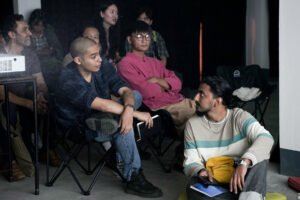
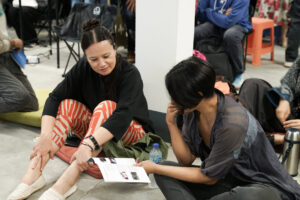
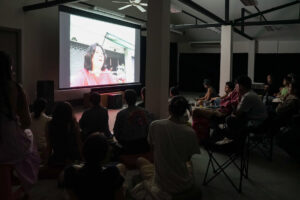
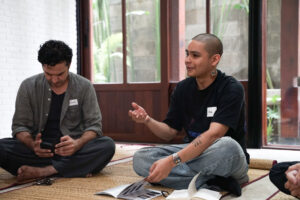
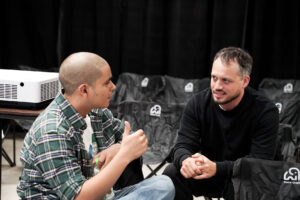
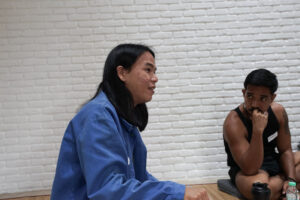
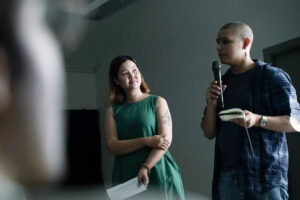
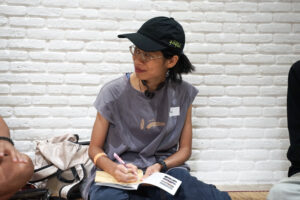
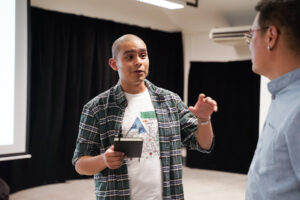
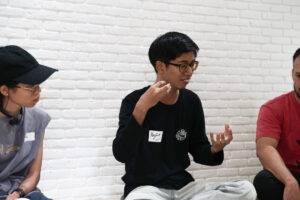
Event 2: Conversaciones, การสนทนา, ဆွေးနွေးပွဲ, Conversations
Date: 18-20 September, 2025
Public Screenings: September 18-19th at Light Bulb
Discussion: September 20th at in-tangible institute
Programmer: A. Paolo Diaz Andrade, Creative in Residence at in-tangible institute
Screened Works:
Day 1:
Lebanese Cedar (2025), dir. Nuria Suaya, Facundo Rodriguez Alonso
Take Me Home (2011), dir. Shin Daewe
Ocular Trauma (2023), dir. Violeta Molyneux
Coffea Arábiga (1968), dir. Nicolás Guillén Landrián
A Train in Dream (2025), dir. Yeyint Naing
Fabric (2017), dir. Piyarat Piyapongwiwat
Of Memory and Debris (2020), dir. Rodrigo Michelangeli
Day 2:
Eight Constructions Imagined by Eight Construction Workers (2012), dir. Eliana Otta
Made in Thailand (1999), dir. Linzy Emery, Eve Laure Moros
Vampires of Poverty (1977), dir. Luis Ospina, Carlos Mayolo
Pulse of a Buried Stone (2024), dir. Sirasin Pangprasertkun
Meetup of Little Men (1987), dir. Alejandro Legaspi
Full screening program and film synopses available here [Thai and English].
Reflection:
in-tangible insititute’s second Moving the Image event, “Conversaciones, การสนทนา, ဆွေးနွေးပွဲ, Conversations”, screened 12 non-fiction short films from across the Global South, engaging with topics of migration and labor rights through the lens of exploitation and resistance. The program aimed to raise awareness of shared social realities between South America and Southeast Asia, using the moving image to engage dialogue that unpacks intercultural struggles related to migration, labor, and their depiction in film works.
This event began with two days of public screenings at Light Bulb, with introductions from the event’s programmer and in-tangible Creative in Residence, A. Paolo Diaz Andrade (with thanks to the POZEN Family Centre for Human Rights, University of Chicago). Following these public screenings, in-tangible hosted a moderated discussion with Paolo and attendees. This discussion explored how the lived realities of migrants and laborers were portrayed in screened films, and ways that the moving image can function as both a liberating, yet potentially exploitative tool.
Discussion Participants: Paolo Diaz Andrade, Rushdi Anwar, Pietro Lo Casto, Yeyint Naing, Sirasin Pangprasertkun, Kyaw Min Htet, Jessica Chen, Naz Noeng


Event 1: Nontawat Numbenchapol
Date: 24 July, 2025
Public Screening at Light Bulb
Private Discussion at in-tangible institute
Screened Works:
• By the River (2013), directed by Nontawat Numbenchapol
• Nurturing Lives in the Forest (2023), produced by Nontawat with Dr. Marco Haenssgen
Reflection:
in-tangible institute’s first Moving the Image event screened two works using distinct styles of documentary filmmaking to explore the tensions between extractive capitalism and Indigenous land rights, and the lasting impact of these conflicts on Indigenous communities in Thailand.
The moderated private discussion that followed engaged with Nontawat and Marco to unpack the challenges of speaking “on behalf” of marginalized communities, the role of documentary films as both evidence and witness, and the benefits of collaborations between filmmakers and social scientists.
Discussion Participants:
Nontawat Numbenchapol, Marco Haenssgen, Som Supaparinya, Anurak Tanyapalit, Rushdi Anwar, Nattakul Khamphinit, Hnin Win, Sittha Lertphaiboonsiri, Jay Santiphap, Jakkrapan Sriwichai, Kyaw Min Htet, Teerapat Panmongkol, Tintin Cooper, Chen Hongyu, Parinot Kunakornwong
Latest Event
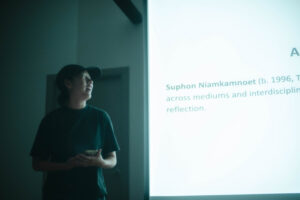
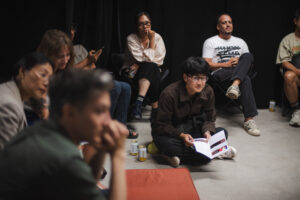
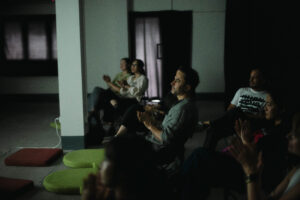
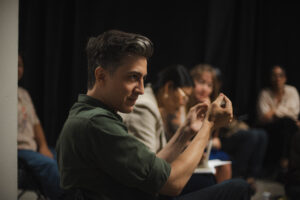
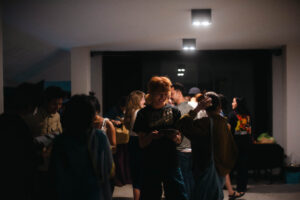
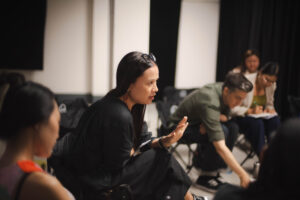
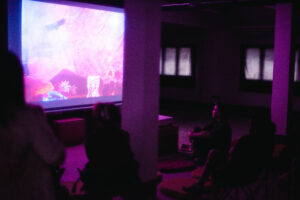
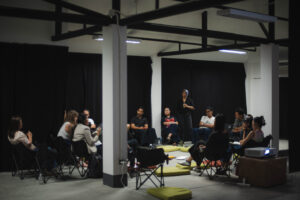
Event 3: Being(s) and Time(s): Sci-Fi Pierces the Colonial Lens
Date: 26 June, 2026, 6 – 9 PM
Venue: Public Screening and Discussion at Light Bulb
Programmer: Suphon Niamkamnoet, in collaboration with in-tangible institute
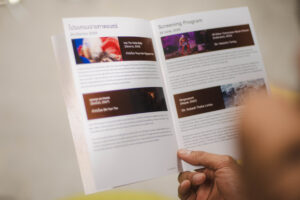
Screening Program:
Of Other Tomorrows Never Known (Indonesia, 2023), Dir. Natasha Tontey
Ningwasum (Nepal, 2022), Dir. Subash Thebe Limbu
Into The Violet Belly (Vietnam, 2022), Dir. Thuy-Han Nguyen-Chi
spaces as traces (Singapore, 2024), Dir. Shi Yun Teo
Full screening program and film synopses available here [Thai and English]
Event Summary:
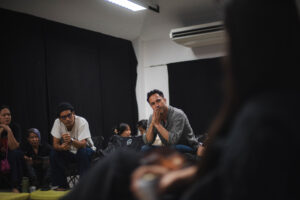
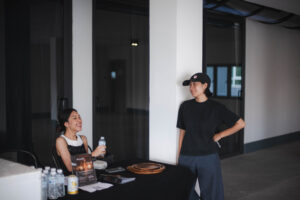
The 3rd edition of in-tangible institute’s Moving the Image program, “Being(s) and Time(s): Sci-Fi Pierces the Colonial Lens”, explored South and Southeast Asian cinema’s distinctive approach to time travel, in contrast with Western science-fiction paradigms that prioritize speed, futurism, or technological innovation.
Programmed by moving image scholar and curator Suphon Niamkamnoet, in collaboration with in-tangible institute, this edition of Moving the Image began with a screening of four short films followed by a moderated discussion hosted at Light Bulb.
Programmer Bio:
Suphon Niamkamnoet (b. 1996, Thailand) is an academic practitioner bridging theory and practice across mediums and interdisciplinary approaches, exploring how ideas take form and provoke reflection.
